Movement & restraint
Concrete naturally changes volume. Joint placement, connected structures, edges, and restraints can influence where a crack appears.

Concrete problem 01 · Cracking
A crack can reflect normal concrete movement, restraint, jointing, support conditions, settlement, load, moisture, or several connected factors. The useful next step is to understand the pattern and the surrounding surface.
A visible crack does not establish one cause or automatically require replacement. Document the pattern, displacement, nearby joints, and whether it appears to be changing.

Design inspiration only. StoneVex publishes project-specific proof after verification.
What to notice first
Look at where the crack begins and ends, whether it follows a joint or edge, whether nearby sections sit at different elevations, and whether similar cracks repeat elsewhere.
Possible contributors
Concrete changes with moisture and temperature, and cracks may also relate to restraint, jointing, support or subgrade conditions, settlement, load, or surrounding water movement. The pattern and context guide the assessment.
Concrete naturally changes volume. Joint placement, connected structures, edges, and restraints can influence where a crack appears.
A crack paired with changed elevation may call for closer review of adjoining slabs, support conditions, drainage, and use.
Ponding, drainage direction, nearby downspouts, landscape changes, and moisture belong in the property conversation.
Request prompt assessment when cracking appears to be changing quickly, sections are vertically displaced, normal walking or vehicle use is uncertain, or the crack connects with broader movement. Online guidance cannot confirm structural performance.
Prepare for the estimate
A useful crack assessment is easier when the visible condition is documented consistently.
Capture the full slab and close detail so the crack can be understood in context.
Note when you first noticed it and whether width, length, or elevation seems to be changing.
Record what happens after rain and where water collects or travels nearby.
Decide whether your main concern is appearance, drainage, access, vehicle use, or a broader renovation.
The StoneVex process
A residential concrete project should be understandable from the first conversation through the final walkthrough.
We learn what is working, what is not, and what you want the finished space to become.
The surface, access, measurements, drainage, and surrounding property inform the conversation.
You receive a clear scope covering the recommended approach, finish, preparation, and project flow.
The project moves from removal and preparation through placement and finishing with clear communication.
We review the completed work and discuss the care guidance relevant to the finished surface.
Related StoneVex services
The on-site review may lead to a focused repair discussion, driveway replacement planning, or slab removal and replacement depending on the affected surface and broader condition.
Primary service
Evaluate localized cracks, joints, edges, and connected surface concerns.
Explore this path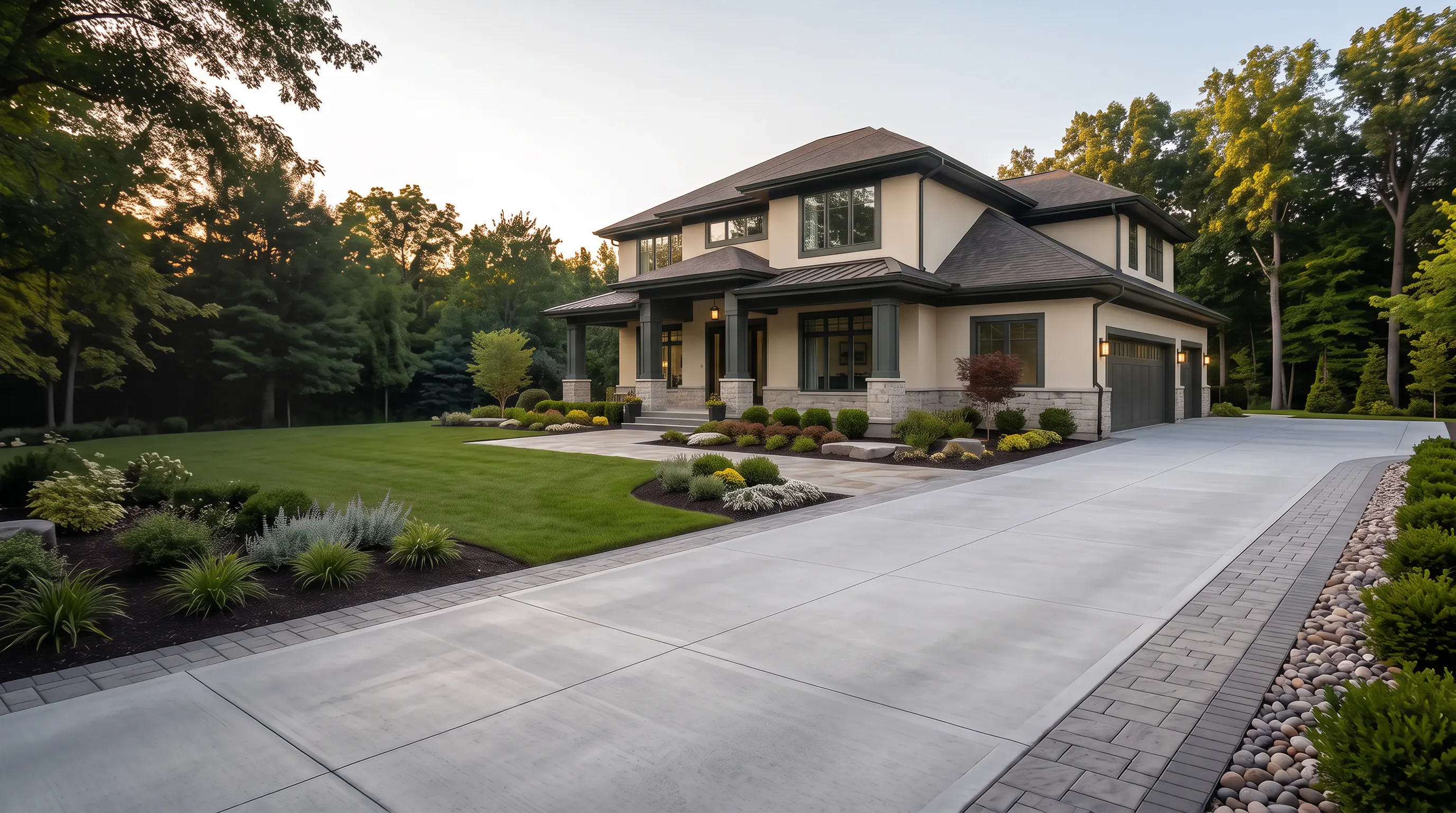
Related service
Consider a broader driveway scope when cracking, movement, drainage, or appearance concerns extend across the surface.
Explore this path
Related service
Discuss removal and replacement when a slab area no longer fits the property or project goal.
Explore this pathQuestions before the estimate
These answers provide general planning guidance. The cause and right scope depend on the property and visible pattern.
Photos can document the visible pattern, but they may not show elevations, support conditions, drainage behavior, continuing movement, or the full relationship to nearby slabs. An on-site estimate is the responsible next step.
No. A focused repair may fit a contained condition when surrounding concrete, elevations, drainage, appearance expectations, and project goals support it. Partial or broader replacement deserves consideration when several concerns are connected or the symptom extends beyond one area.
Take wide and close photos from more than one angle. Note where the condition begins and ends, nearby joints and transitions, what changes after rain, and whether walking, vehicle movement, or drainage are affected.
The appropriate response depends on the crack, movement, location, moisture, surrounding concrete, and the goal of the work. Avoid assuming that filling the visible line addresses the reason it appeared; start with an assessment of the full condition.
Concrete repair is the primary starting point for localized cracking. Driveway replacement or slab and removal services may be relevant when cracking is widespread, connected to movement, or part of a broader replacement goal.
Request an on-site estimate
Share the essentials now. StoneVex can gather photos and deeper project details during follow-up rather than making the first step unnecessarily long.
Your information is used to respond to your project request. Photo upload will be added only when secure file handling is connected and verified.